Therapy Helps

EMDR Therapy
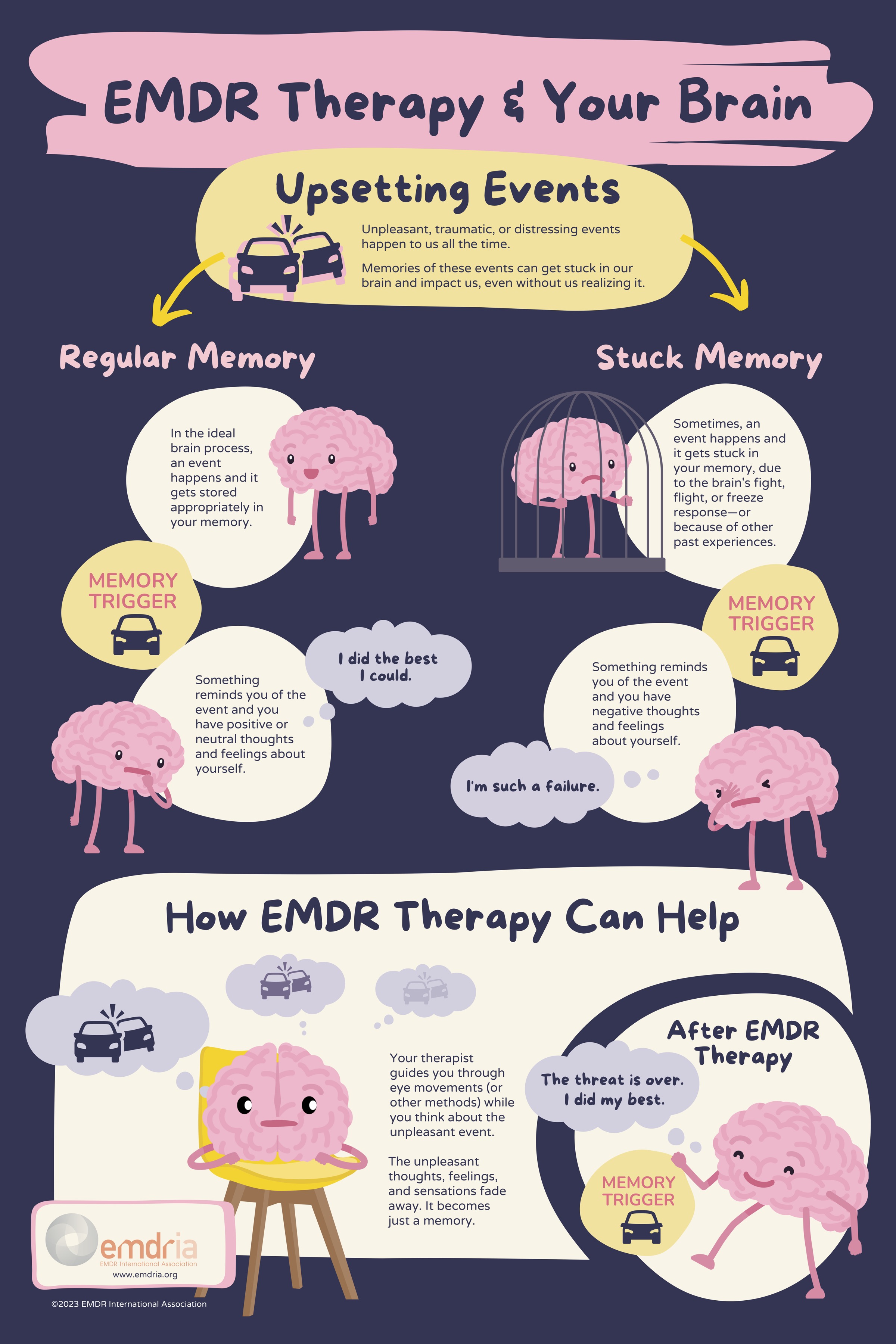
Eye Movement Desensitization and Reprocessing (EMDR) is a structured, evidence-based psychotherapeutic modality designed to alleviate the distress associated with traumatic memories. Unlike traditional talk therapy, which focuses on verbal processing and cognitive reframing, EMDR targets the neurobiological storage of trauma.
The AIP Model
The foundation of EMDR is the Adaptive Information Processing (AIP) Model which posits that the brain is naturally geared toward mental health unless a traumatic event blocks this process.
- Maladaptive Storage: During a traumatic event, high levels of cortisol and adrenaline can cause the brain to store the memory in a "raw" and fragmented state.
- Neural Integration: By utilizing Bilateral Stimulation (BLS) such as lateral eye movements, tactile tapping, or auditory tones; EMDR facilitates the integration of the disconnected fragments. This allows the memory to move from the amygdala (the emotional alarm center) to the neocortex (the rational, linguistic center).
Clinical Application
While originally developed for Post-Traumatic Stress Disorder (PTSD), extensive clinical research has validated EMDR's efficacy for a broad spectrum of conditions:
- Anxiety & Panic Disorders: De-escalating the physiological response to triggers.
- Cost-Effectiveness: Accessing high-quality clinical care at a more accessible rate than individual sessions.
- Complicated Grief: Processing the "stuck" aspects of loss.
- Chronic Pain: Addressing the psychological components of pain management.
- Phobias: Desensitizing the irrational fear response.
The Eight-Phase Standard Protocol
EMDR is a rigorous, eight-phase treatment. It is not merely the application of eye movements; it requires a comprehensive clinical framework:
Phase |
Title |
Primary Objective |
|---|---|---|
| 1 | History & Planning | Identifying "targets" (disturbing memories) and current triggers. |
| 2 | Preparation | Establishing "Resourcing" (grounding techniques) to ensure emotional stability. |
| 3 | Assessment | Identifying the specific image, negative belief, and physical sensations of the memory. |
| 4 | Desensitization | The core processing phase using BLS to reduce the Subjective Units of Disturbance (SUDS) scale. |
| 5 | Installation | Incorporating and strengthening a "Positive Cognition" (e.g., "I am safe now"). |
| 6 | Body Scan | Eliminating any residual physical tension associated with the memory. |
| 7 | Closure | Ensuring the client feels grounded and safe at the end of the session. |
| 8 | Re-evaluation | Reviewing progress and maintaining treatment effects over time. |
EMDR is recognized as a first-line treatment for trauma by international organizations, including the World Health Organization (WHO) and the American Psychiatric Association (APA).